

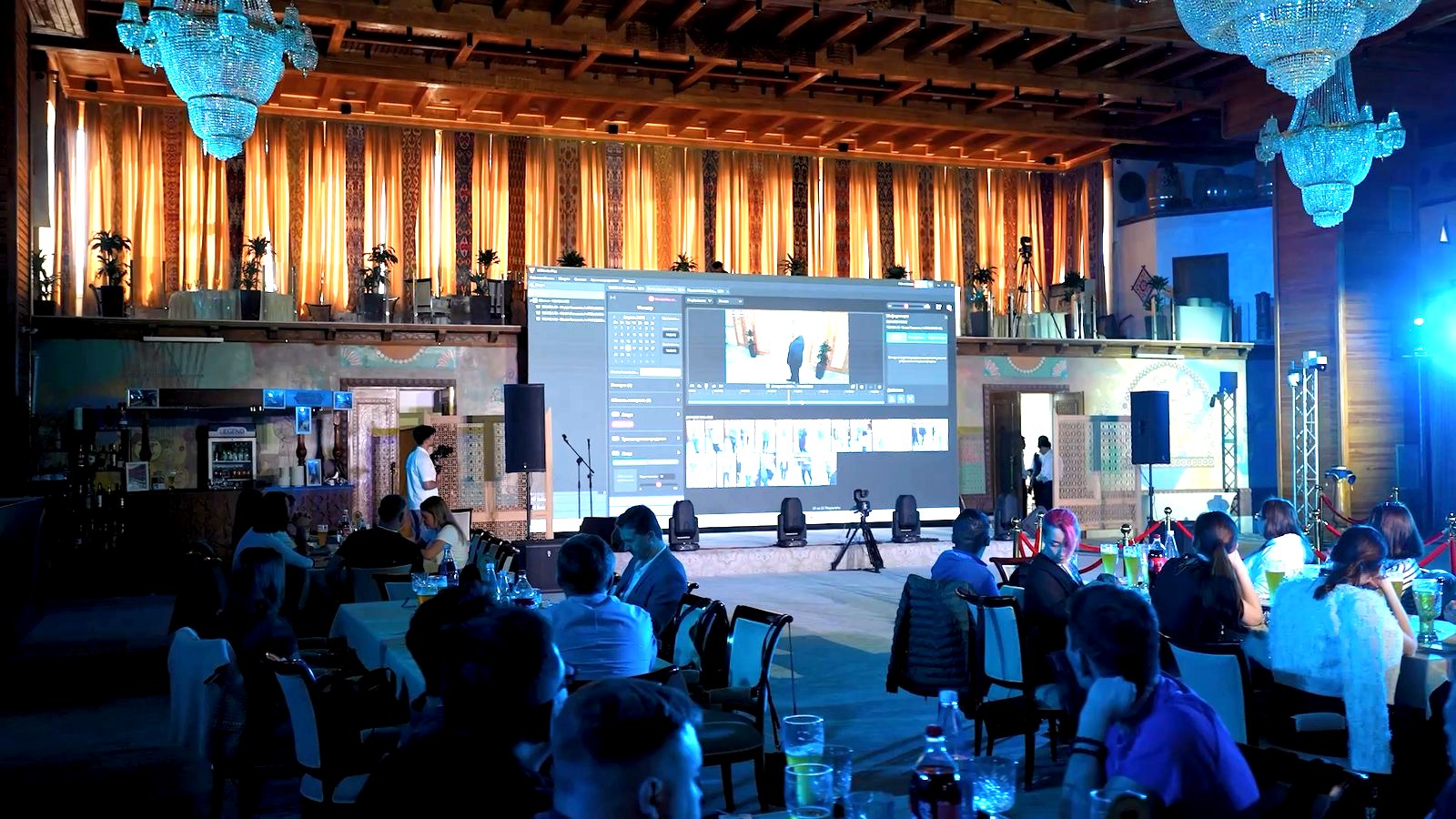
Context of the location
The «Regional promo wave across 12 cities» project in Moscow shouldn't be described with the single formal category «Regional promo wave». What matters in it is route supervision, the consolidated report by region, and a consistent contact standard: these details show how the city, the venue, and the team shape what shoppers and store visitors will see.
Per the original brief, Besson Agency built the «Regional promo wave across 12 cities» around a practical trio: route supervision, the consolidated report by region, and a consistent contact standard. For the client, this was a way to keep the project on a working track: the idea doesn't clash with the venue, the team understands its roles, and the final reporting shows not just the picture but the quality of contact.
Local logic
In a project for an FMCG brand, Moscow, Russia affected the route, the pace of approvals, and the vendors' work more than a presentation would suggest. If the 12 cities don't match the guest's real route, the project starts to look imported. If the «unified team training» element is embedded in the local context, the brand comes across more naturally.
During preparation, it's worth walking the participant's path separately: where they encounter route supervision, how the team conveys the meaning of the «consolidated report by region», and at what moment they notice the consistent contact standard. This kind of breakdown moves the event or BTL from a diagram onto a map of real actions: who greets them, where materials are stored, how the team handles a delay, and what the participant sees.
Risk at the venue
The main geographic risk is mistaking the obvious for the verified. The team should see the access road, the waiting points, the technical constraints, and the venue's usual pace in advance. For the «Regional promo wave across 12 cities», these questions tie to the 12 cities and shift synchronization, so they need to be resolved before the final timing is set.
This approach turns Moscow into a working context. The client understands why some decisions depend on the city while others can be transferred to other markets.
How this helps the client
This material is useful for brands planning a similar launch: first the context of Moscow, Russia is checked, then the audience route is assembled, and only after that are the decor, staff, equipment and reporting materials chosen.
The main takeaway on the «Regional promo wave across 12 cities»: local delivery should reinforce the idea, not argue with it. Then the regional promo wave becomes part of the brand communication and doesn't look like a random activity in the calendar.
The city as a test of the project
The Regional promo wave across 12 cities is useful to read as a test of the Moscow, Russia location. Here comparing the cities against one another sets the first level of perception, a quick response to deviations affects how fast guests move, and the 12 cities show how well the team understands the environment the brand operates in.
In a task like this, Moscow isn't a backdrop but part of the mechanics. When the «unified team training» element is agreed on in advance, shift synchronization doesn't clash with the venue, and route supervision doesn't look like a random choice, the project starts to feel local and precise.
The journey in a real location
For the client, the main question isn't «where to hold it» but «which detail of the city will strengthen the regional promo wave». In the «Regional promo wave across 12 cities», that role is carried by the consolidated report by region and a consistent contact standard; without them the location would just be an address.
When carrying the experience to another city, you can't mechanically copy the city-by-city comparison. It's better to keep the principle: first understand the habits of the audience — shoppers and store visitors — then check the route, and only then choose vendors and visual solutions.
What to scale after launch
This is exactly how the news piece meets the client's practical need. It shows why geography affects the budget, scenario, staff and report, rather than adding the word «Moscow» for the sake of search results.
The takeaway for the brand: local delivery is strong when a quick response to deviations, unified team training, and route supervision work as a single system. In that form, the project can be planned with more confidence and the budget defended before the internal team.
Where a local team saves time
The geography of the «Regional promo wave» project helps stress-test the idea. It's important to understand in advance which solutions can be scaled, which require local expertise, and where the brand needs not a supplier but a coordinator with hands-on experience in Moscow, Russia.
In practice this means the brief should capture not just the format but also the quality criterion. For local delivery that criterion could be the guest journey, production accuracy, clear reporting, contact quality, or the team's ability to make fast decisions without losing the point.
Why the city can't be treated as a backdrop
During preparation it's worth checking access, unloading, material storage, local permits, the language environment and team availability separately. These details rarely make it into a slick reference, but they are exactly what holds the quality of delivery together.
How geography changes the decision
It's exactly this kind of specificity that makes the page relevant for SEO and convenient for a real reader: key phrases emerge from the project context rather than replacing meaning with query density.