

What proves the result
The report on the «Immersive show — product presentation. Panasonic» project must know in advance exactly what proves the result: the connection between the product and the place, historic Samarkand, the immersive product scenario. Otherwise the report shows that the event happened but does not explain which decisions are worth repeating or changing.
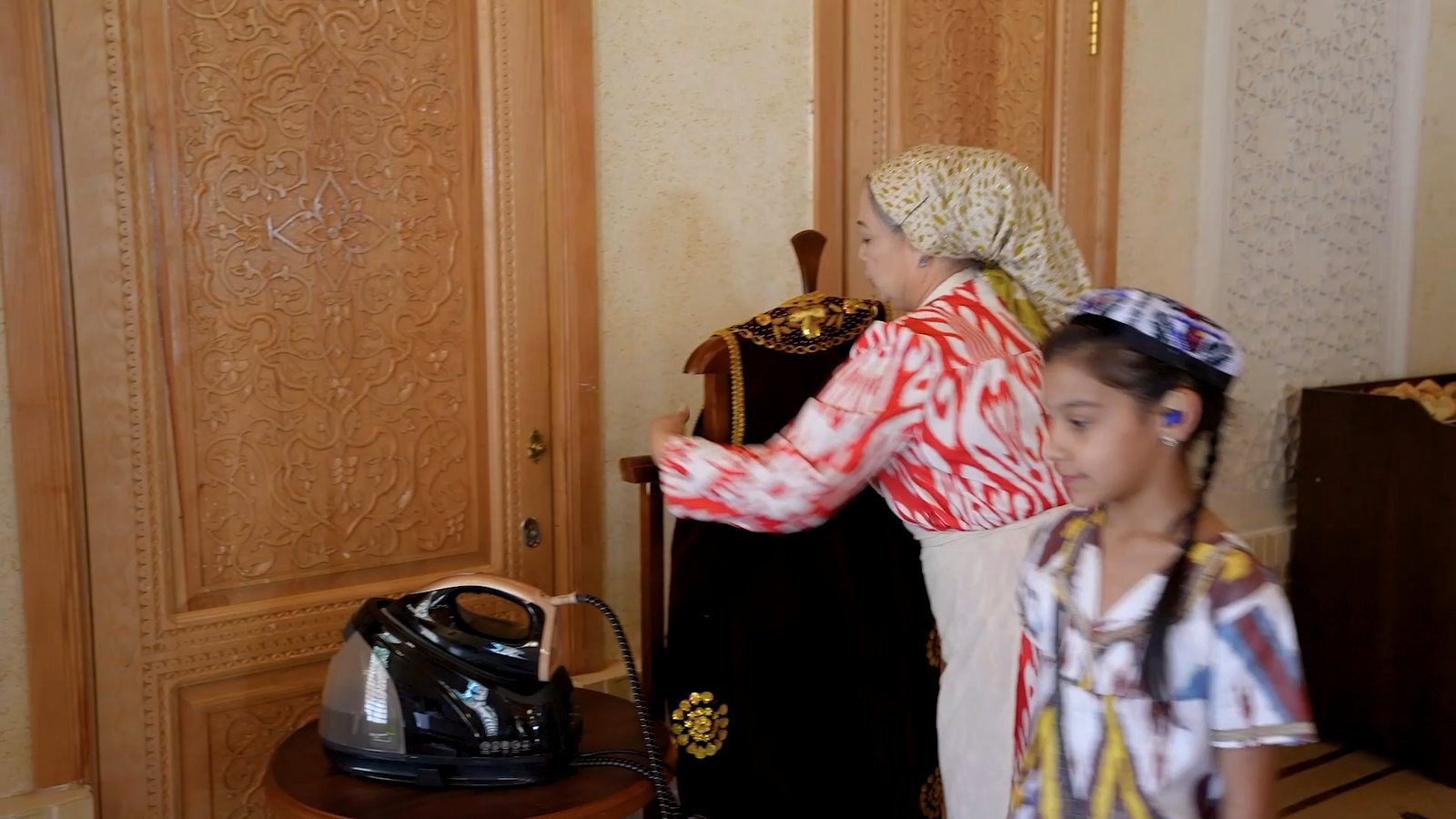
For Panasonic, we organized an immersive event in the historic center of Samarkand, turning the launch of new products into a large-scale event project for distributors from across Central Asia. The task was not simply to show the company's devices but to create an event format with a clear dramaturgy, where the product, the story and the space work as a single scenario. We developed a concept that connected past and present through the legend of a boy named Timur, his grandfather, and a mysterious medallion brought from Japan. At the start of the event, guests were split into four groups, each participant was given headphones, and each group was led by its own guide along a predetermined route. The entire dramaturgy was synchronized so that the groups moved simultaneously, did not cross paths, and went through all the route points in sequence. At each station, integrated into the atmosphere of the old city, Panasonic products became part of a live performance: at the ancient market a character in historic costume used a juicer, at the barber's shop new shaving devices were presented, and in the home of Timur's grandmother Panasonic appliances were woven into a scene of baking bread and buns. This approach turned the product launch into a full-fledged immersive show, where the brand's technologies unfolded naturally through story, cultural context and the route scenario. The climax of the event was the revelation of the medallion's secret, inside which Panasonic's values were encoded, and the evening finale was a gala dinner in the style of the Great Silk Road. The project showed how the route scenario, production, the work of the guides and group control help a brand present its product through a managed immersive format.
Materials before the finale
For Panasonic, what matters is not just the fact that the immersive product presentation took place. What matters is understanding how the Central Asian distributors, the video content and the space as part of the demonstration performed: where the audience engaged, where adjustment is needed, and which decisions can be carried into the next launch.
The report on the «Immersive show — product presentation. Panasonic» is stronger when the team knows in advance which shots, statuses and figures will help the client make the next decision.
KPIs without a stretch
Data is only useful in connection with decisions: the connection between the product and the place shows the context, historic Samarkand helps read the audience's reaction, and the immersive product scenario records the quality of execution. A report like this can be discussed not only with marketing but with procurement too.
An honest report does not mask the weak points. It shows where the Samarkand, Uzbekistan location helped, where a different team would have been needed, which element is worth reinforcing, and why the audience reacted the way it did.
How to use the experience
For a new tender content like this saves time. The client sees more quickly which questions to ask the agency, which metrics to request in advance and why pretty percentages without context say nothing about the real result.
Takeaway from "Immersive Show — Product Presentation. Panasonic": reporting should preserve the project's experience. That way the project works for longer than a single day, and Panasonic gains a foundation for its next decision, budget and team roadmap.
Evidence of the result
In the report on "Immersive Show — Product Presentation. Panasonic", the first things to show are the video content, the space as part of the demonstration, and the link between the product and the venue. These facts explain the result better than a generic line about a high level of organization or a set of the best photos.
For Panasonic it is important to decide in advance how the scenario built around the technology is documented. If this point only comes up after the event, the team loses part of its evidence and the project's conclusions become too generic.
The report as a team tool
A strong report connects the evening visual environment with the brand's objective, historic Samarkand with the team's work, and the immersive product scenario with the behavior of the audience — partners, clients and guests of the product presentation. Then the numbers do not hang separately from the reality of the venue in Samarkand, Uzbekistan.
In the "Immersive Show — Product Presentation. Panasonic" project, this approach helps you see honestly what to repeat, what to simplify, and where the next launch will require a different resource. That is more useful than trying to turn every metric into a win.
What to carry into the next launch
Before a new tender, the client can use the report as a short risk map: where to check the video content, who to assign the product-to-venue connection to, how to describe the Central Asian distributors in advance, and what materials to request from the agency before the start.
Takeaway for the brand: reporting extends the life of the project. When the project is analyzed through facts, Besson Agency and the client's team gain a foundation for the next budget, the next venue and more precise communication.
What counts as evidence of the result
For the "Panasonic Presentation", the final analytics begin before the launch. Photos, field notes, timing, checklists and conclusions should be gathered so that the Panasonic brand sees not only the emotion but also the practical result.
In practice this means the brief should capture not just the format but also the quality criterion. For reporting and KPIs that criterion could be the guest journey, production accuracy, clear reporting, contact quality, or the team's ability to make fast decisions without losing the point.
Why KPIs should be alive
A good report gathers evidence as the project unfolds: photo documentation, statuses, coordinator comments, contact figures, deviations from the plan and recommendations. Then the finale becomes the start of the next decision.
What data is needed after the finale
It's exactly this kind of specificity that makes the page relevant for SEO and convenient for a real reader: key phrases emerge from the project context rather than replacing meaning with query density.